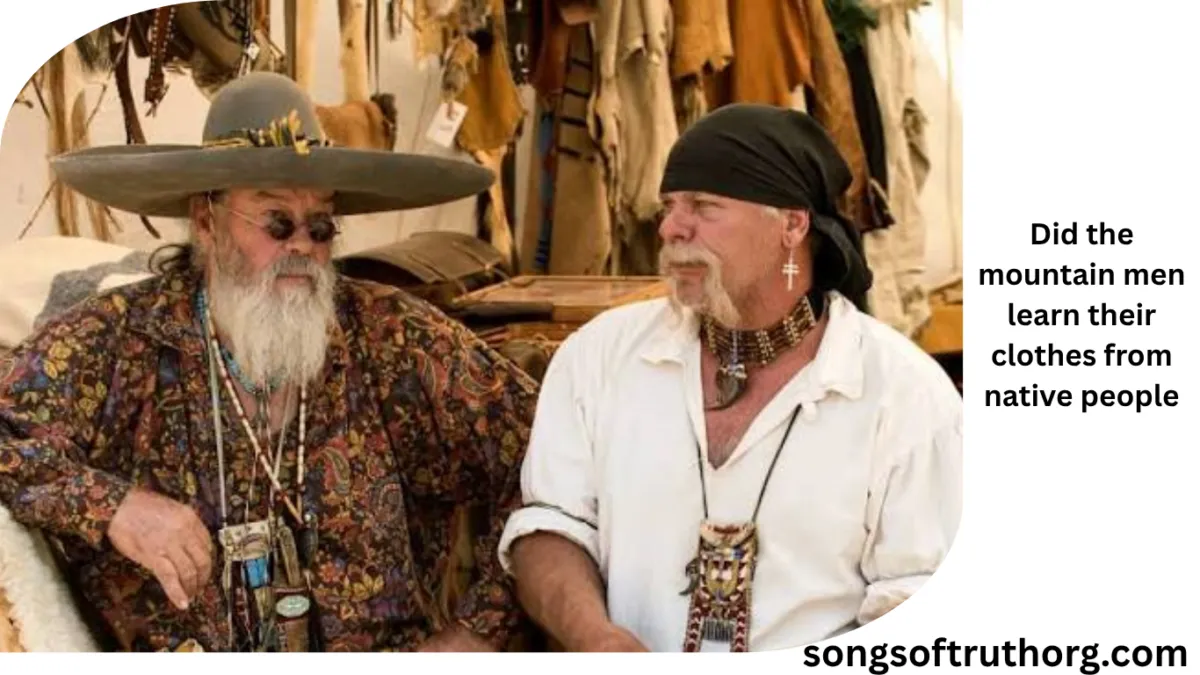
The short answer is yes, but the story is more complicated than simply saying that mountain men learned how to make their clothes from Native people.
Mountain men in the American West adopted many useful clothing styles, materials, and techniques from Indigenous peoples. They also used European-American clothing, purchased trade goods, and made garments themselves from animal hides. Their clothing was shaped by many cultures at the same time.
During the height of the Rocky Mountain fur trade, especially from the 1820s through the 1830s, mountain men spent long periods living and traveling in Indigenous homelands. They traded with Native nations, learned local skills, worked with Indigenous guides, married Indigenous women in some cases, and sometimes lived with Native communities. The National Park Service notes that mountain men often knew regional tribes and sometimes lived with or married Indigenous women.
This close contact naturally affected what mountain men wore.
Buckskin clothing, moccasins, leggings, robes, and other practical items became strongly associated with the mountain-man image. But it would be inaccurate to say that every piece of mountain-man clothing came directly from Native people. Some clothing came from European traditions, some from trade goods, and some was created by mountain men themselves.
The best way to understand the question is to look at how clothing was made, traded, adapted, and used in the early American West.
Did Mountain Men Learn Their Clothing Styles From Native People?
Yes, Native peoples had an important influence on mountain-man clothing, but they were not the only source.
Mountain men were practical people. Their work required clothing that could survive cold weather, rough terrain, horseback travel, wet conditions, and long periods away from settlements.
Indigenous peoples had already lived in these environments for generations. They had developed clothing and footwear suited to particular climates, landscapes, and activities.
Mountain men could see the advantages of these designs.
For example, moccasins were practical for walking and were widely used by Indigenous peoples in many parts of North America. Buckskin was also useful because animal hides could be turned into durable clothing.
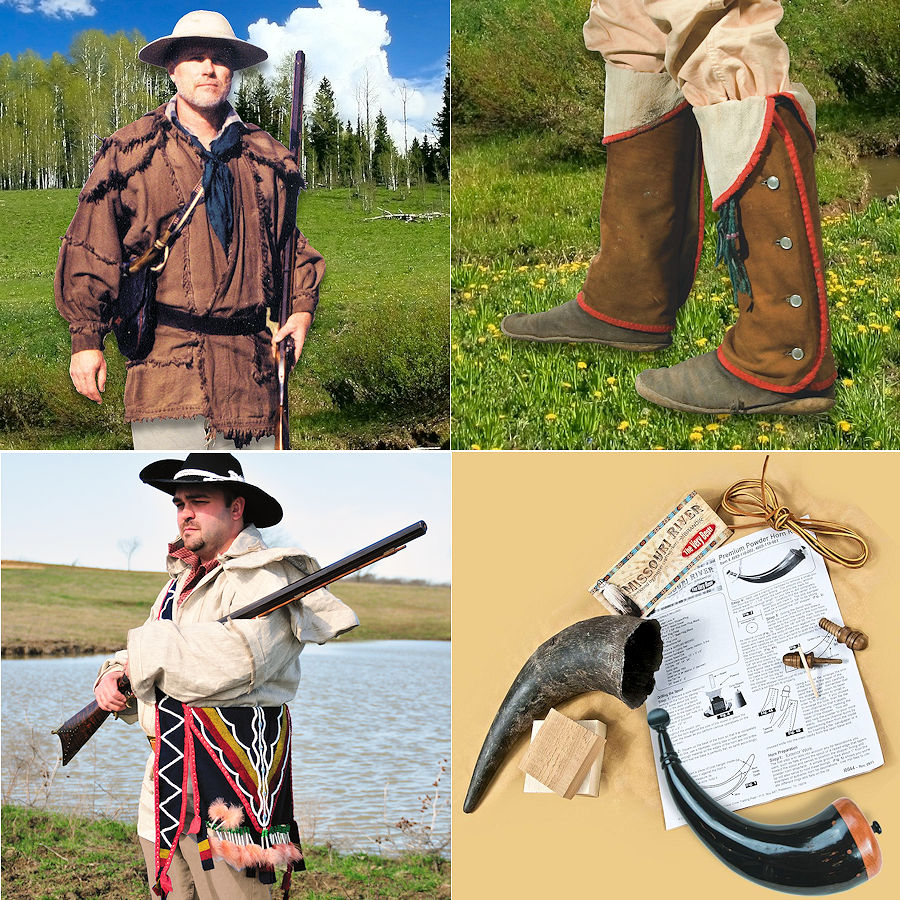
Mountain men adopted and adapted these types of garments.
However, adoption does not mean that every mountain man simply copied Native clothing. Their clothing was often a mixture of Indigenous designs, European clothing traditions, locally available materials, and manufactured trade goods.
Also read:What Is Casual Chic Clothing? A Simple Guide to Looking Stylish and Comfortable
That mixture is one of the most important facts to understand.
Who Were the Mountain Men?
The term “mountain men” usually refers to trappers, traders, explorers, guides, and other frontier workers who operated in the Rocky Mountain West during the early 19th century.
The period most closely associated with the classic mountain-man era was roughly the early 1800s through about 1840.
The fur trade was a major reason these men traveled into the Rocky Mountains.
Beaver fur was especially valuable because it was widely used to make felt hats. The National Park Service explains that the beaver-fur trade flourished from roughly 1807 to 1840, with the Rocky Mountain region becoming an important center of the industry.
Famous mountain men included people such as Jim Bridger, Jedediah Smith, Kit Carson, James Beckwourth, and others.
But the popular image of the mountain man can be misleading.
Many were not completely alone in the wilderness. The National Park Service points out that most mountain men worked with other people and that many worked for fur companies rather than living as completely independent individuals.
This matters because their clothing also came from a network of trade and cultural exchange.
Why Did Mountain Men Need Different Clothing?
Life in the Rocky Mountains was very different from life in an eastern American town.
Mountain men could spend months away from established settlements.
They faced:
- Cold temperatures
- Snow
- Rain
- Rivers
- Rocky terrain
- Dense forests
- Open plains
- Long horseback journeys
- Hunting
- Trapping
- Camp work
- Limited access to stores
A fashionable outfit was not very useful if it could not survive this lifestyle.
Clothing needed to be practical.
It needed to protect the body while allowing a person to move easily.
This is one reason mountain men were willing to adopt clothing ideas that worked well in the environment.
Why Was Buckskin So Important?
Buckskin became one of the most recognizable materials associated with mountain men.
Buckskin was made from animal hide, especially deer hide, that had been processed to make it flexible and usable as clothing.
The material could be used for:
- Shirts
- Leggings
- Pants
- Moccasins
- Jackets
- Gloves
- Bags
- Other practical items
The National Park Service describes mountain men as making their own clothing from materials including deerskin, feathers, and beads.
Buckskin was useful because it was relatively flexible and could be repaired in the field.
A mountain man did not necessarily need a tailor or store if he knew how to work with hides.
That was extremely valuable when living far from settlements.
Did Native People Teach Mountain Men How to Make Buckskin?
In some cases, mountain men likely learned practical hide-working knowledge through contact with Indigenous peoples, but we should be careful about making a blanket statement.
Different Indigenous nations had their own traditions for processing hides and making clothing.
Mountain men interacted with many different Native nations across the West.
They could learn by observation, trade, cooperation, marriage, or direct instruction.
At the same time, European Americans already had traditions of working with leather and animal hides.
So the development of mountain-man clothing cannot be credited to only one cultural group.
It is better understood as cultural exchange.
Mountain men entered environments where Indigenous people already had highly developed knowledge of local materials. They adopted useful practices and combined them with skills and materials they already knew.
Did Mountain Men Wear Moccasins?
Yes, moccasins were commonly associated with mountain men and frontier travelers.
Moccasins were particularly useful because they were light, flexible, and quiet compared with some types of hard-soled footwear.
They could be made from animal hide and repaired when necessary.
The Library of Congress describes the famous frontier character Hawkeye in James Fenimore Cooper’s The Last of the Mohicans wearing moccasins and buckskin leggings, showing how strongly these items had become connected with the broader American image of the frontier hunter.
However, literary descriptions are not the same as direct evidence about every historical mountain man.
This distinction is important.
Popular books, paintings, movies, and reenactments have helped create a recognizable mountain-man outfit, but actual clothing varied greatly by person, region, season, occupation, and access to trade goods.
Were Moccasins Invented by Native Americans?
Moccasins have deep Indigenous roots in North America. Different Native nations developed their own styles based on their local environment and needs. Mountain men could trade for moccasins, receive them from Native people, or make their own using designs they had learned or observed. This shows that their clothing was shaped by cultural exchange.
Did Mountain Men Buy Clothes From Native People?
Sometimes mountain men traded with Native people for clothing and other useful goods. They could also get supplies from fur companies and trading posts. A mountain man might wear a manufactured shirt, buckskin leggings, traded moccasins, and a wool blanket. This means his clothing could come from several different sources.
What Was the Rendezvous?
Rendezvous were large gatherings where mountain men traded furs for supplies, shared news, and met with other traders and Native people. These events also created opportunities for cultural exchange. Mountain men could see different clothing styles, while Native people could obtain manufactured goods. Trade helped spread clothing materials, designs, and ideas.
Did Mountain Men Copy Native Clothing?
Mountain men sometimes adopted and adapted Indigenous clothing styles because they were practical. They might trade for Native-made clothing or use similar designs when making their own garments. However, their clothing was not simply copied from Native people. They also used European-American clothing and manufactured trade goods.
Why Were Leggings Useful?
Leggings protected the legs from cold, brush, insects, and rough terrain. Different Indigenous nations used different styles of leggings, and mountain men adopted them because they were useful for outdoor work. Buckskin leggings became especially associated with hunters and trappers.
Did Mountain Men Make Their Own Clothes?
Some mountain men made or repaired their own clothing using materials such as animal hides. This was useful because they often spent long periods far from towns and stores. However, they did not make everything themselves. They also traded for clothing and bought manufactured goods through fur companies and trading posts.
What Clothing Did Mountain Men Get From Trade?
Mountain men had access to many manufactured goods through the fur trade.
Trade networks connected the Rocky Mountains with places such as St. Louis and other commercial centers.
The men could obtain items they could not easily make themselves.
These could include:
- Cloth shirts
- Blankets
- Hats
- Metal buttons
- Knives
- Guns
- Woolen goods
- Tobacco
- Tools
- Other manufactured supplies
The National Park Service describes mountain men traveling to rendezvous where they exchanged pelts for supplies such as salt, sugar, tobacco, traps, and other goods.
This shows why the classic mountain-man outfit should not be imagined as entirely handmade.
Did Native Clothing Influence Mountain-Man Hair and Accessories?
There was cultural exchange beyond basic clothing.
Mountain men sometimes adopted or adapted hairstyles, decorations, and accessories that they encountered in Indigenous communities.
The National Park Service notes that mountain men had close relationships with regional tribes and sometimes lived with or married Indigenous women.
However, it is difficult to make broad claims about exactly how much influence any single Native nation had on a particular mountain man’s appearance.
Historical evidence varies.
Paintings, written descriptions, trading records, and later stories all provide different pieces of the picture.
Why Did Mountain Men Dress Differently From Soldiers?
Mountain men and soldiers had different jobs.
A soldier generally operated within an organized military system.
Uniforms communicated rank, identity, and authority.
A trapper had different needs.
He needed clothing for:
- Hunting
- Trapping
- Horse travel
- Climbing
- Camping
- Weather protection
- Long periods away from settlements
This encouraged practical clothing rather than standardized uniforms.
A mountain man could change his clothing based on what was available.
Was Mountain-Man Clothing the Same Across the West?
No, mountain-man clothing varied across the West. Different climates, local materials, trade goods, and relationships with nearby Indigenous communities all influenced what men wore. A trapper in the northern Rocky Mountains might dress differently from one working in New Mexico or along the Missouri River. Personal preference and the type of work also played a role.
This regional diversity is often lost in modern images of the mountain man.
Did Native Americans Also Adopt Mountain-Man Clothing?
Yes, cultural exchange worked in both directions.
Indigenous communities traded with European Americans and obtained manufactured goods.
The same trading networks that allowed mountain men to acquire Native-made clothing also allowed Native people to acquire European and American manufactured products.
The exchange could involve:
- Blankets
- Metal tools
- Knives
- Guns
- Cloth
- Beads
- Other manufactured goods
This means it would be misleading to describe the relationship as Native people simply teaching mountain men everything.
Both groups participated in a wider system of trade and cultural change.
How Did Trade Change Native Clothing?
Trade with European and American settlers brought new materials to many Indigenous communities. Cloth, metal tools, glass beads, and firearms became more common in some areas. Native people often used these new materials while keeping their own clothing styles and traditions. Mountain men also adopted useful Indigenous designs while continuing to wear European-American clothing and trade goods.
Did Mountain Men Marry Native Women?
Yes, some mountain men married Indigenous women. These relationships could help create strong cultural connections between families and communities. A mountain man might learn local languages, food practices, hunting skills, travel methods, and clothing techniques. However, not every mountain man had this experience. Their relationships with Indigenous communities varied from person to person.
Did Native People Teach Mountain Men How to Survive?
In many cases, Indigenous knowledge was extremely important to outsiders traveling through the West.
Native peoples had extensive knowledge of:
- Trails
- Water sources
- Plants
- Animals
- Weather
- Seasonal movement
- Hunting
- Local geography
The National Park Service notes that mountain men gained expert knowledge of the land and Native peoples, later making them valuable as guides for military expeditions and wagon trains.
Clothing was only one part of this much larger exchange of knowledge.
Was Mountain-Man Clothing Comfortable?
Mountain-man clothing was made for work and survival rather than modern comfort. Buckskin was flexible and useful, but it needed care and could become stiff or heavy when wet. Moccasins worked well on some types of ground but were not suitable for every environment. Mountain men had to choose clothing based on warmth, durability, comfort, and what they could easily find or make.
Why Did Mountain Men Wear Buckskin?
Mountain men wore buckskin because it was practical and widely available. Animal hides could be turned into shirts, leggings, pants, and other useful items. Buckskin was flexible, durable, and could be repaired in the field. These benefits made it a practical choice for men who spent long periods traveling and working outdoors.
Did Every Mountain Man Wear Buckskin?
No.
This is one of the biggest myths created by later popular culture.
The National Park Service does describe mountain men as wearing buckskin clothing, but historical clothing was not a standardized uniform.
Mountain men could wear combinations of:
- Buckskin
- Wool
- Cotton
- Linen
- Blankets
- Leather
- Manufactured clothing
The exact combination depended on what a person owned, where he traveled, and what he could obtain.
Why Do Movies Make Mountain Men Look the Same?
Modern movies and television shows need viewers to recognize characters quickly.
A man wearing buckskin, moccasins, a fur hat, and carrying a rifle immediately looks like a “mountain man” to a modern audience.
That visual style became a kind of shorthand.
But real historical clothing was more varied.
Paintings and written descriptions also sometimes idealized frontier life.
The National Park Service has repeatedly emphasized that the popular mountain-man legend differs from the more complicated historical reality.
Did Mountain Men Wear Beaver Fur?
They certainly handled beaver fur because trapping beaver was their main business during the height of the fur trade.
But there is an important distinction between trapping beaver and wearing beaver clothing.
Beaver pelts were valuable commercial products.
The fur was especially important for making felt hats.
The National Park Service explains that beaver fur was highly valued for hat production during the period.
A mountain man’s personal clothing could therefore contain materials other than beaver.
Also read:How to Make a Nice Outfit: A Simple Guide to Looking Stylish and Put-Together
Why Did the Mountain-Man Era End?
The classic mountain-man era began to decline around 1840. Beaver became harder to find, the fur trade became less profitable, and fashion changed as silk hats became more popular. Many mountain men then moved into new jobs such as guides, scouts, traders, and military scouts. Their knowledge of the land remained valuable.
What Happened to Mountain-Man Clothing After the Fur Trade?
Mountain-man clothing did not disappear when the fur trade declined. Buckskin, moccasins, and leggings remained connected with frontier life. However, former trappers who moved into more settled jobs often began wearing more woven and manufactured clothing. This shows how clothing changed as their work and lifestyle changed.
Did Mountain Men Learn Everything From Native People?
No.
This is the clearest answer.
Mountain men learned some things from Native peoples, but they also brought their own cultural traditions and learned from many other sources.
Their clothing was influenced by:
- Indigenous clothing traditions
- European clothing traditions
- American frontier practices
- Fur-company supplies
- Local animal materials
- Commercial trade
- Personal experience
- Regional climate
The result was a blended frontier style.
The Difference Between Influence and Direct Teaching
This distinction is important when answering historical questions.
We can say with confidence that Indigenous cultures influenced the clothing and practical life of mountain men.
But it is harder to prove that a specific mountain man learned a specific garment-making technique from a particular Native person unless historical evidence directly records it.
Historical research requires this level of caution.
A painting showing a mountain man wearing moccasins proves that he wore them in the depiction.
It does not automatically prove who taught him how to make them.
Likewise, the fact that Indigenous people used buckskin clothing does not mean every mountain man learned buckskin preparation directly from Native people.
The broader evidence supports cultural exchange, not a simple one-source explanation.
What Is the Most Accurate Answer?
So, did the mountain men learn their clothes from Native people?
The most accurate answer is:
Mountain men were strongly influenced by Indigenous clothing traditions and practical knowledge, and some likely learned specific skills through direct contact with Native communities. However, their clothing was not entirely learned from Native people. Mountain men combined Indigenous designs and materials with European-American clothing, manufactured trade goods, and their own adaptations.
This explanation fits the historical evidence better than either extreme.
It is wrong to say that Native people had no influence.
It is also wrong to say that mountain men simply copied all their clothing from Native Americans.
The reality was cultural exchange.
Why This History Matters
Mountain-man clothing shows how cultures influenced each other in early American history. Indigenous nations had lived across the West for thousands of years before mountain men arrived. They already had established communities, trails, trade routes, and knowledge of the land. Mountain men learned from these existing cultures, and clothing was one visible result of that cultural exchange.
A Better Way to Understand Mountain-Man Clothing
Instead of asking only whether mountain men “copied” Native clothing, it is more useful to ask how different cultures exchanged ideas and materials.
A mountain man might:
- Buy a manufactured shirt.
- Make buckskin leggings.
- Trade for moccasins.
- Use a wool blanket.
- Carry European-style equipment.
- Learn local survival skills from Indigenous people.
- Repair his own clothing.
- Adapt garments to local conditions.
That combination explains the historical mountain-man appearance better than the idea of one complete outfit coming from one culture.
Mountain Men and Native People Were Part of a Larger Trade Network
The Rocky Mountain fur trade connected many groups.
Mountain men, fur companies, merchants, Native nations, military organizations, and distant consumers all participated in a changing economic system.
Beaver pelts could travel from the Rocky Mountains to eastern markets.
Manufactured goods could travel in the opposite direction.
Indigenous traders could participate in exchanges at trading posts and rendezvous.
The clothing worn by a mountain man was therefore connected to a much larger system.
A single buckskin shirt could represent local hunting, hide processing, Indigenous influence, and frontier adaptation all at once.
What We Can Learn From the Clothing
Mountain-man clothing provides a useful example of how cultures change through contact.
People often imagine cultural influence as one group giving something to another.
History is usually more complicated.
People borrow.
They adapt.
They trade.
They combine ideas.
They keep older traditions while adopting new materials.
Mountain men did this with clothing just as they did with food, tools, transportation, language, and survival practices.
This is why the mountain-man wardrobe is best understood as a product of cultural interaction.
Frequently Asked Questions About Mountain Men and Native Clothing
Did mountain men learn how to make moccasins from Native Americans?
Some mountain men likely learned moccasin-making skills through contact with Indigenous people, while others obtained moccasins through trade or made their own using knowledge from different sources. The evidence does not support saying that every mountain man learned the skill directly from Native Americans.
Did Native Americans make clothes for mountain men?
In some cases, Native people traded or provided clothing and other goods to mountain men. However, mountain men also made their own clothing and obtained manufactured goods through fur-trade networks.
What was the most common material used by mountain men?
Buckskin was one of the most recognizable materials, especially for working clothing such as leggings and shirts. However, mountain men also used wool, cotton, leather, blankets, and manufactured fabrics.
Did mountain men wear traditional European clothing?
Yes. Mountain men did not abandon European-American clothing completely. Their wardrobes often combined manufactured clothing with buckskin, leather, moccasins, and other frontier garments.
Is the mountain-man outfit shown in movies historically accurate?
Only partly. Buckskin, moccasins, leggings, and other frontier garments have historical connections, but movies often combine clothing from different regions and periods to create a recognizable mountain-man appearance.
Final Thoughts
So, did the mountain men learn their clothes from Native people? In part, yes. Indigenous peoples had a major influence on the practical clothing, footwear, materials, and outdoor knowledge used by many mountain men. Mountain men lived and worked in Native homelands, traded with Indigenous communities, and sometimes lived with or married Indigenous women.
But their clothing did not come from one source. Mountain men combined Indigenous influences with European-American traditions, manufactured trade goods, locally available animal hides, and their own practical adaptations. Buckskin clothing, moccasins, and leggings became important parts of the mountain-man image, but actual clothing varied from person to person and region to region.
The most accurate way to understand mountain-man clothing is therefore as a product of cultural exchange. Indigenous knowledge and designs played an important role, but mountain men also brought their own traditions and participated in a much larger network of trade and adaptation. That complicated history makes the real story more interesting than the simple frontier image often shown in movies and popular stories.
For more ideas for real, everyday living, visit Songoftruth.org.